- ROLE
- Product Designer
- SCOPE
- Product Strategy · UX Research · End-to-End Product Design
- TEAM
- Product · Engineering · Internal AI Team
- TIMELINE
- 2025–Present
01.The Problem
More reporting could not mean more manual work.
Flight Attendants (FAs) use an internal system to report operational issues, such as catering, cabin service, and Wi-Fi problems. These reports help the airline identify service gaps and improve operations. The business wanted to increase reporting participation, but the existing manual workflow would struggle to keep up with more submissions.
of eligible FAs submitted reports
estimated manual processing capacity
reports after some long weekends
02.What I Found
The bottleneck wasn't in one interface. It was across the reporting loop.
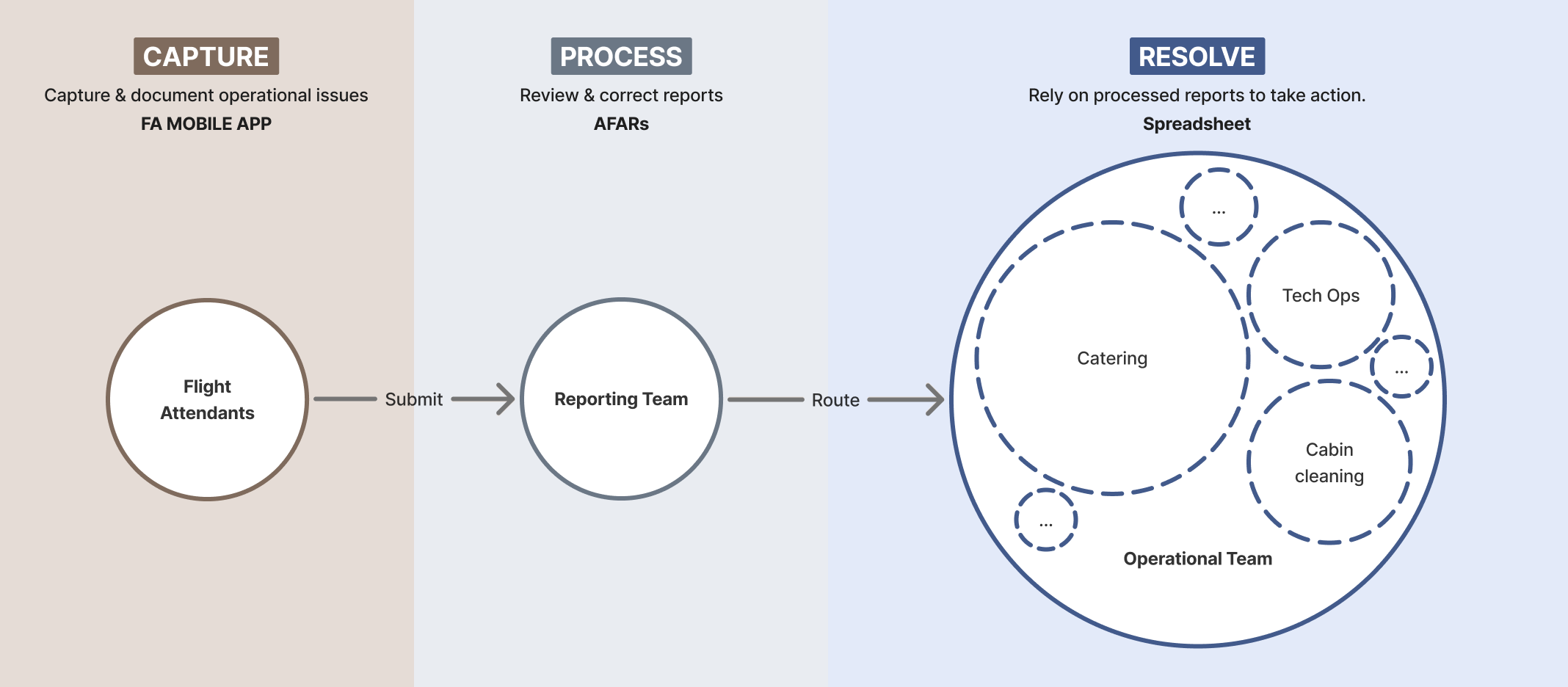
Research across three user groups revealed breakdowns across the reporting lifecycle.
CAPTURE / Flight Attendants
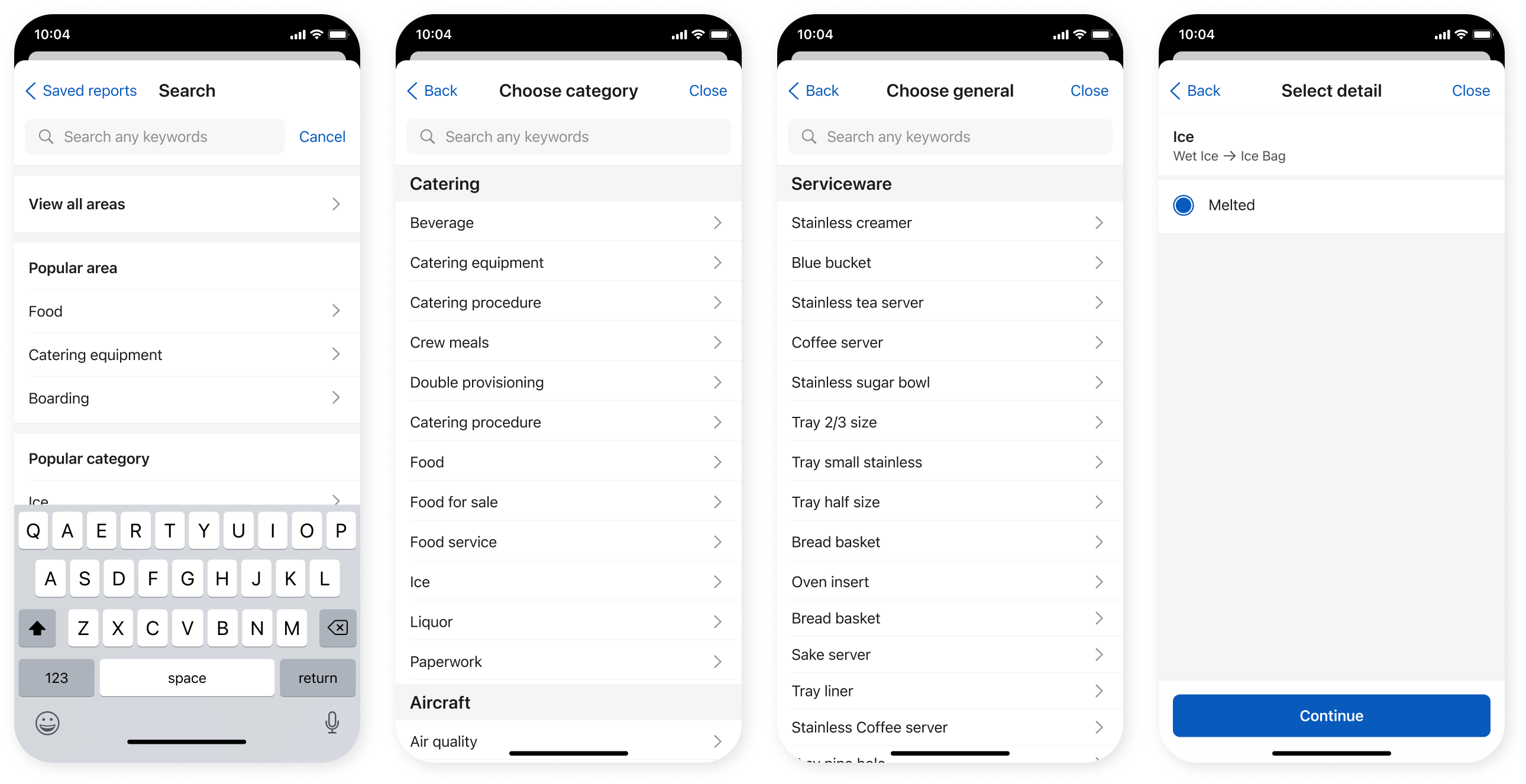
Reporting asked too much upfront—and gave little back. Before submission, FAs struggled to navigate a complex classification system. After submission, they rarely received updates or knew whether their reports led to action—leaving many feeling “unheard.”
PROCESS / Reporting Team
Manual processing limited the system's capacity. Despite FAs classifying issues during submission, only about 10% of reports were classified correctly. The remaining 90% required manual reclassification by a two-person Reporting Team, which also corrected report information and routed submissions across roughly eight disconnected tools.
RESOLVE / Operations + Flight Attendants
Resolution remained disconnected. Reports were distributed through emailed spreadsheets, but visibility often depended on stakeholders reaching out to the Reporting Team—or the team proactively flagging emerging issues. Without a shared workspace, investigation and follow-up remained fragmented.
The system captured issues, but never closed the loop.
03.The Strategic Shift
Scale the system's capacity—not just reporting volume.
Prioritizing the dependency — Increasing FA submissions without strengthening downstream processing would add pressure to an already manual workflow. Through cross-functional prioritization, we aligned on improving the Reporting and Operations experiences before expanding FA reporting.
Defining a meaningful MVP — Engineering initially favored a minimal migration of the existing system, while Product and Design advocated for improvements that would justify the learning curve for long-time users. Rather than treating migration as the goal, we aligned on an MVP that would support AI-assisted classification, routing to operational teams, two-way communication, and report status tracking through resolution.
01 — STRENGTHEN DOWNSTREAM WORKFLOWS
Reporting + Operations
02 — SIMPLIFY FA REPORTING
FA Mobile
04.Building the Reporting Loop
Redesigning responsibilities, not just interfaces.
CAPTURE / Flight Attendants
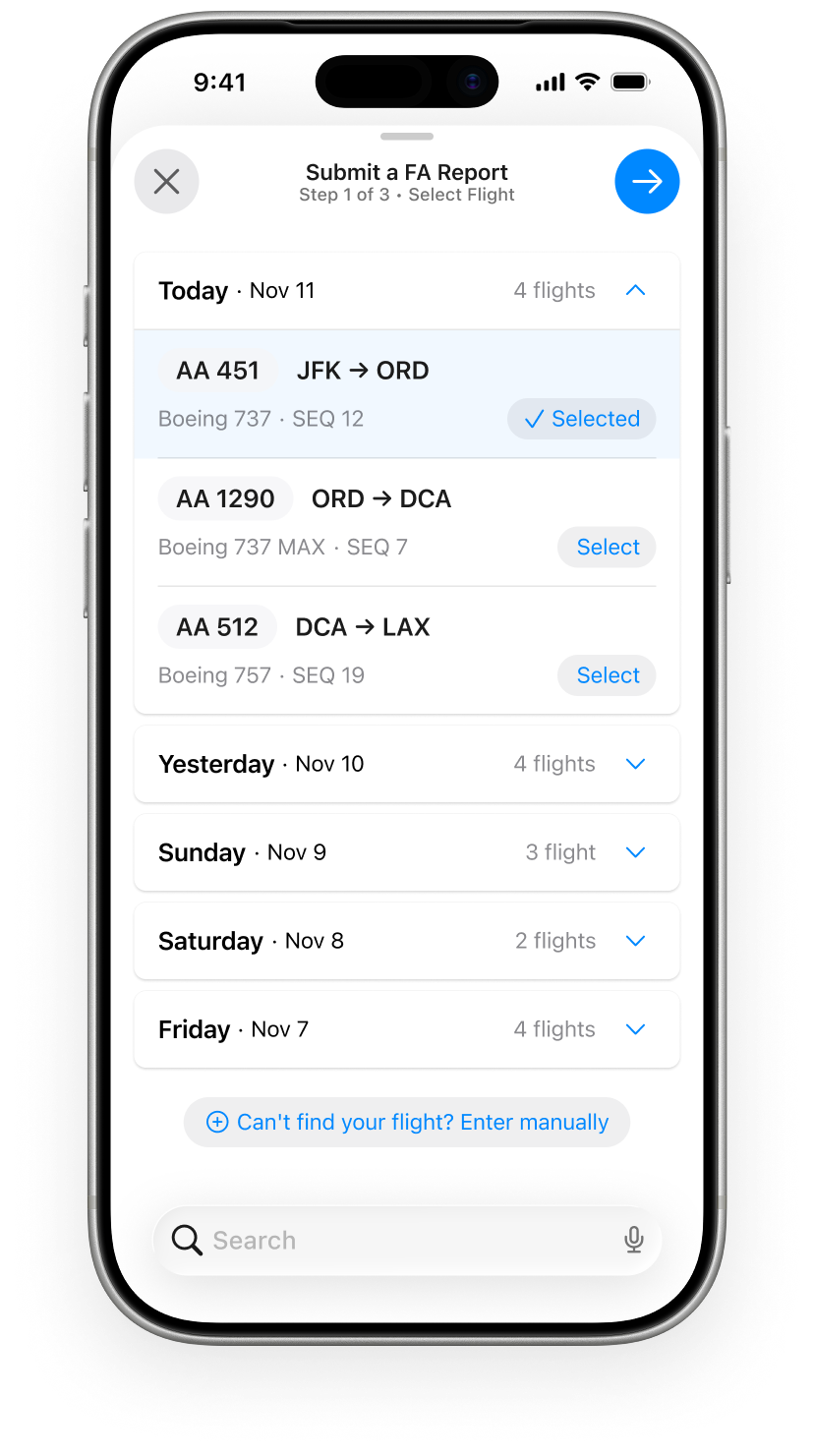
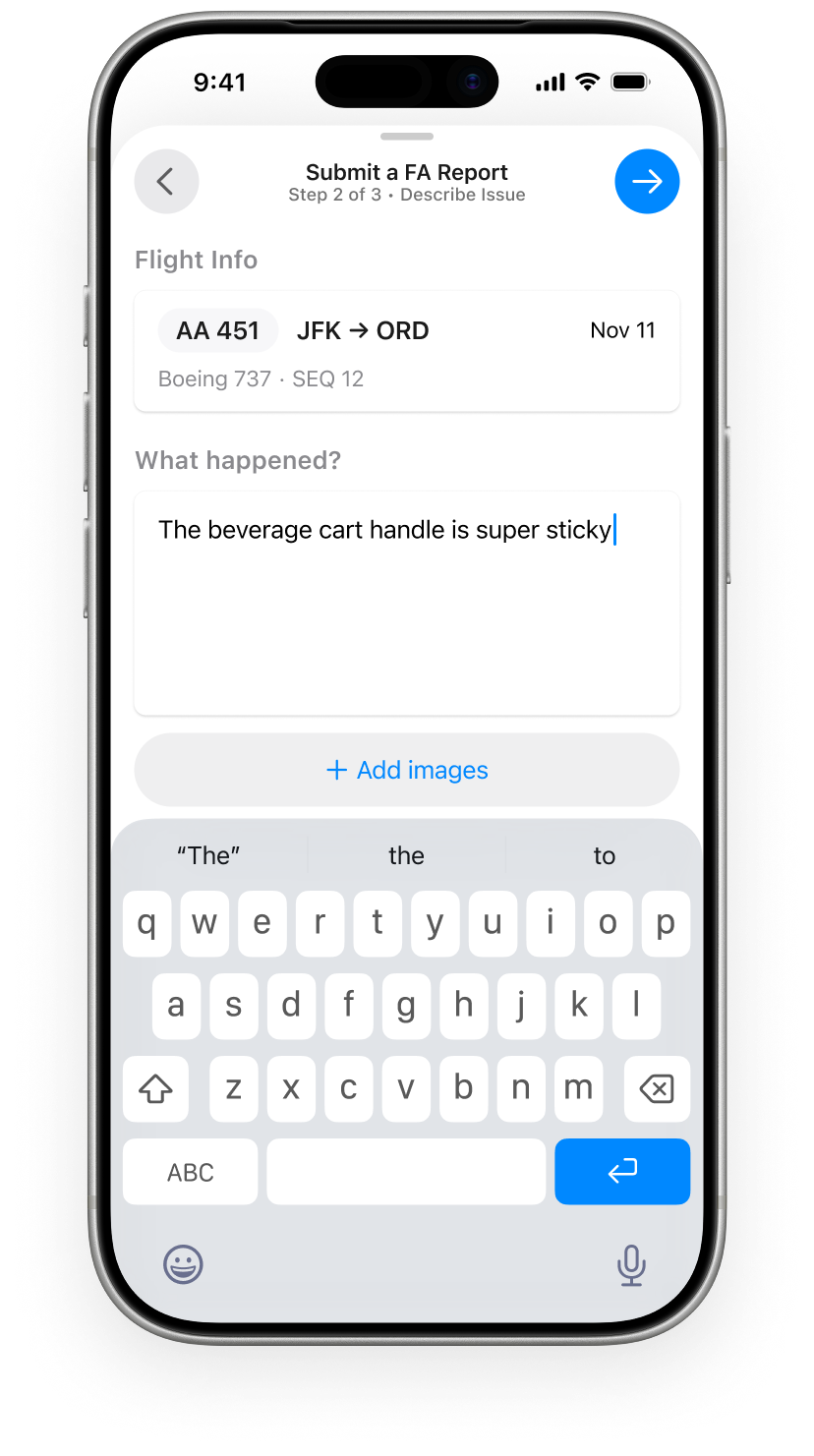
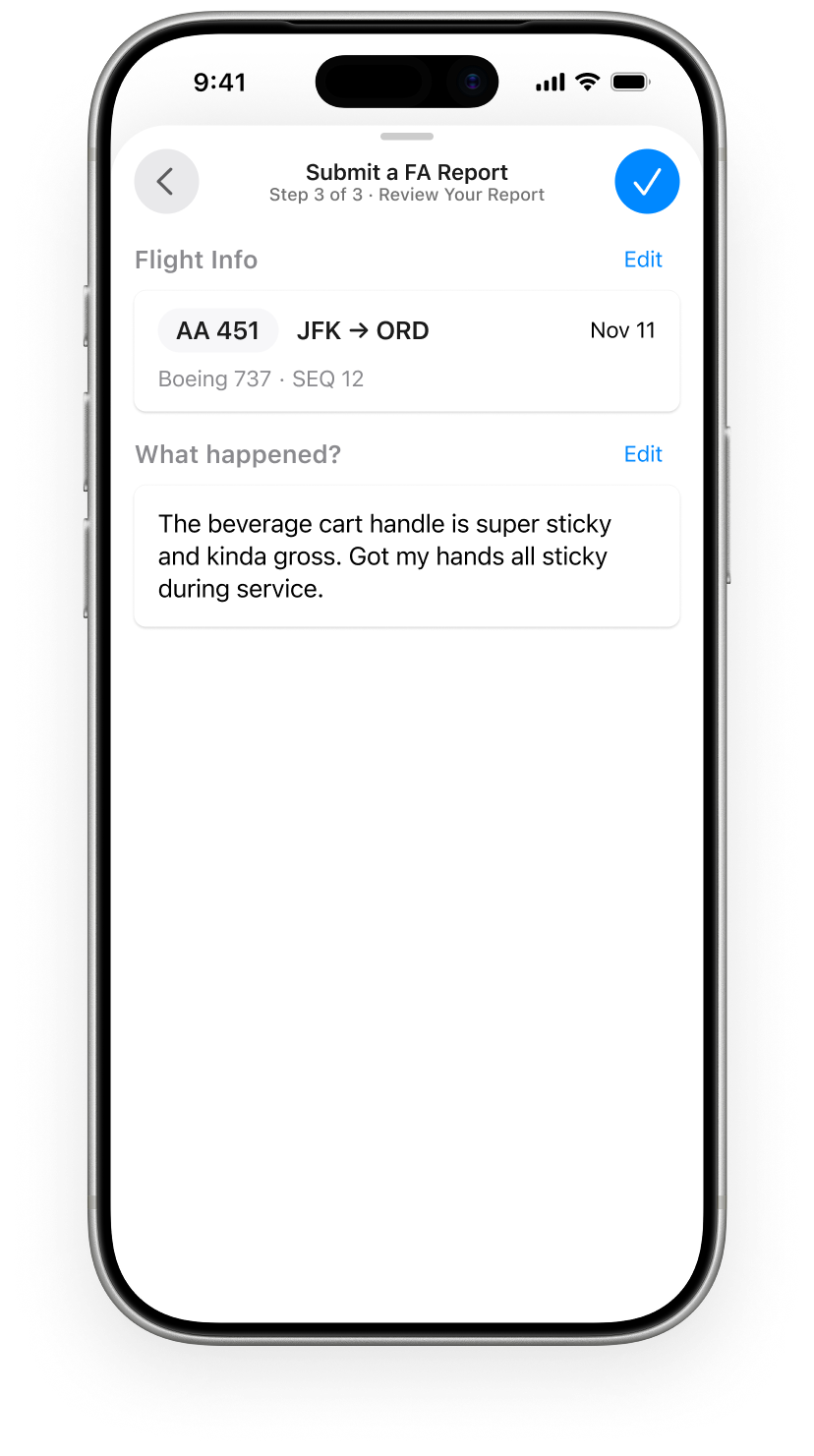
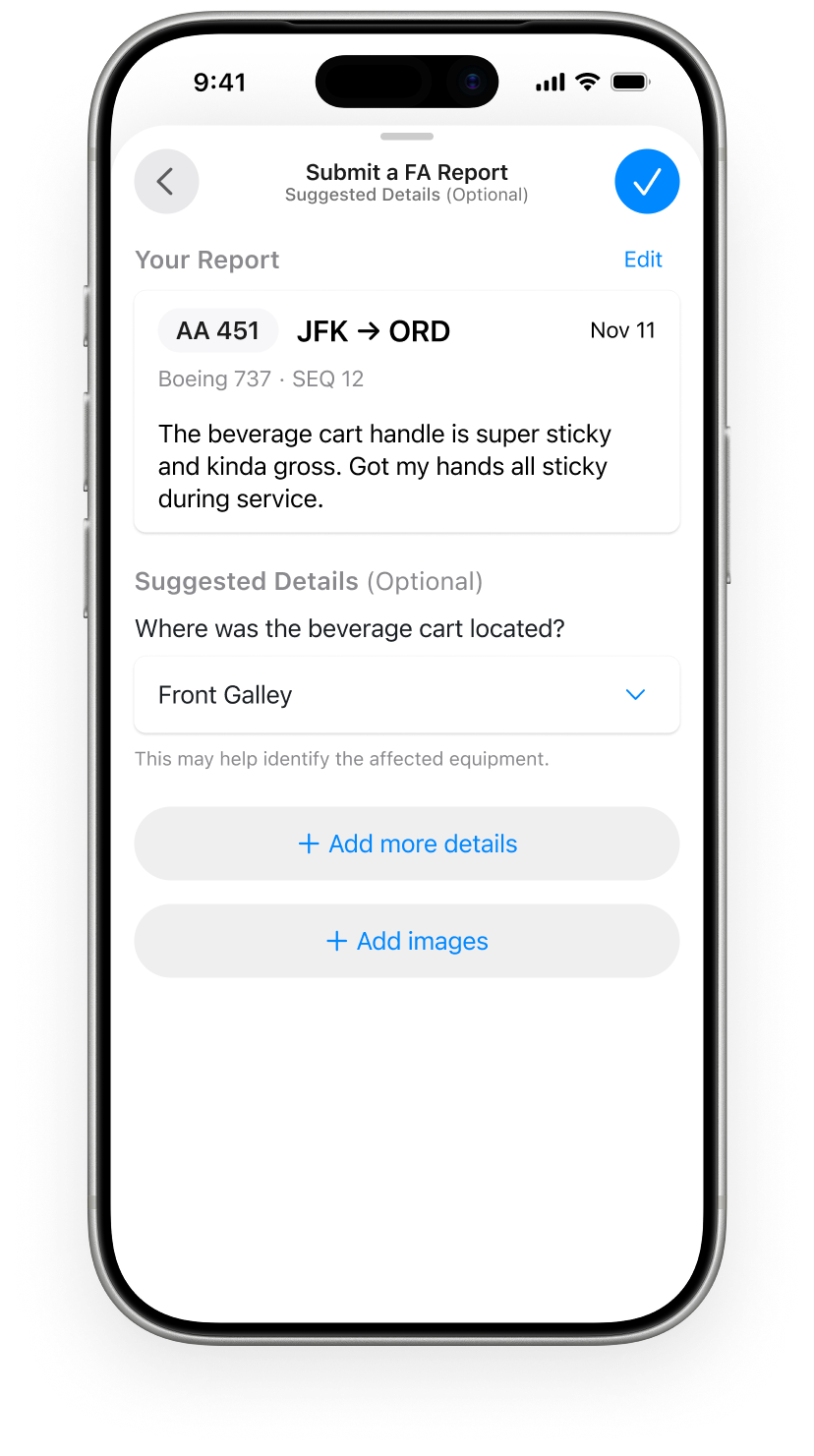
Let FAs report what happened—not classify it.
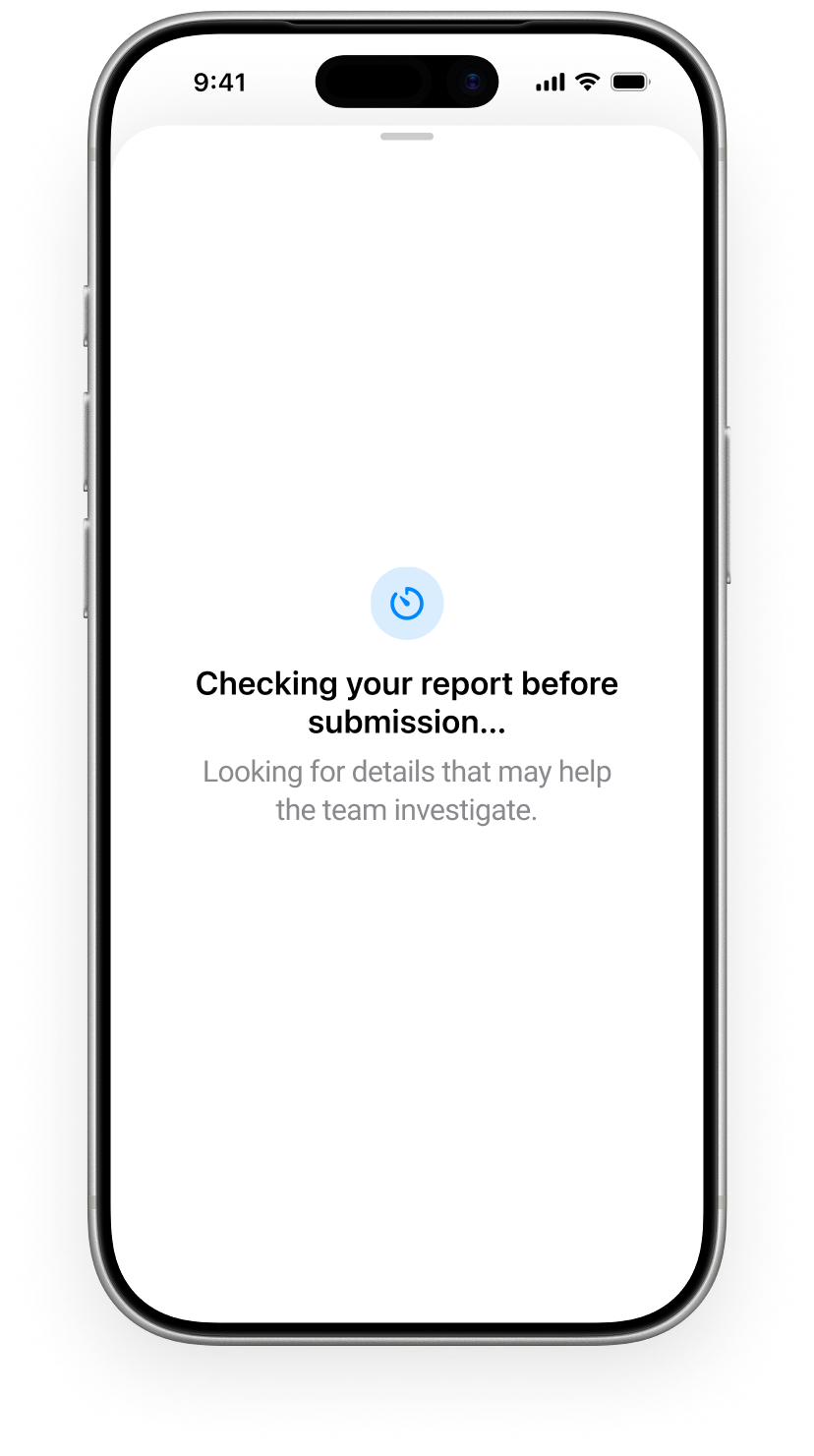
The redesigned flow allows FAs to describe issues naturally, with optional follow-up prompts to capture missing details. Classification moves downstream, so FAs can focus on reporting what happened rather than navigating internal categories.
PROCESS / Reporting Team
From fragmented tools to one reporting workspace.
The redesigned portal brings report visibility and processing into one workspace. Instead of moving between disconnected tools, the Reporting Team can review incoming reports, correct qualifiers, and route them to the appropriate departments. Flight information is automatically corrected using existing operational data, removing one routine manual step.
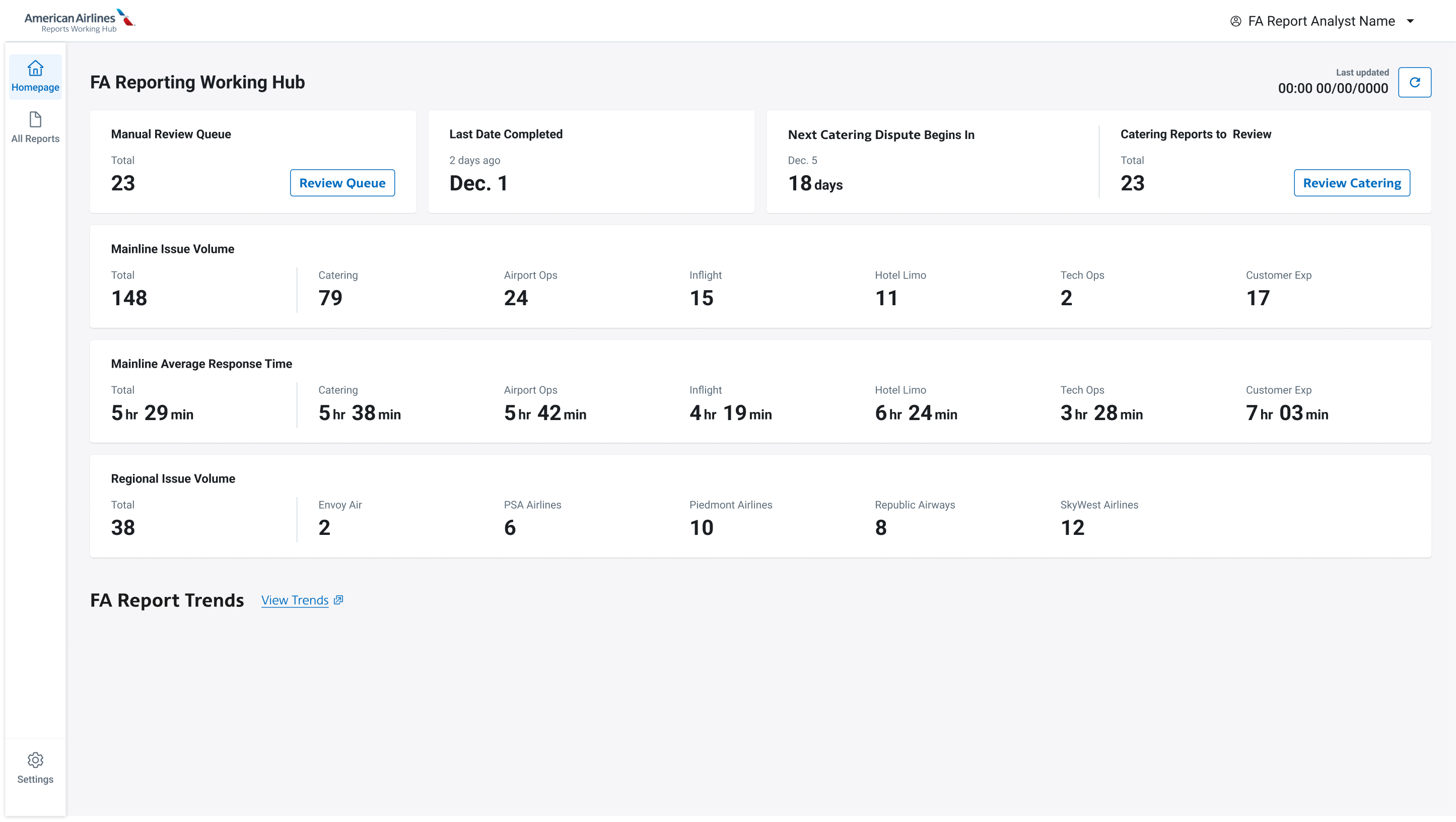
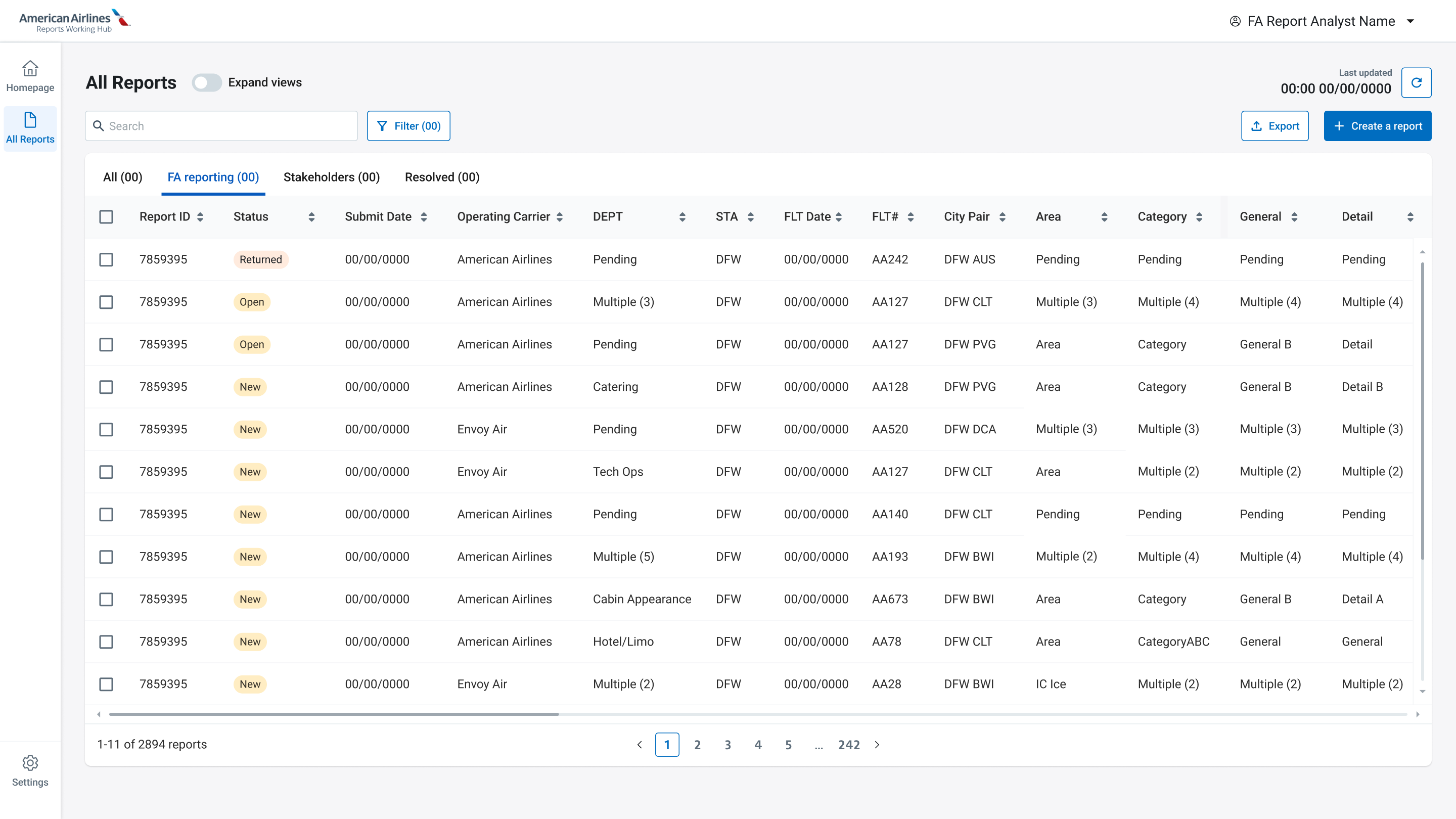
Designing for human oversight — Manual classification and routing were retained from the start rather than relying entirely on AI. The planned AI-assisted workflow would handle routine classification, while the Reporting Team remains responsible for exceptions and cases requiring human judgment.
RESOLVE / Operations + Flight Attendants
Close the loop with Flight Attendants.
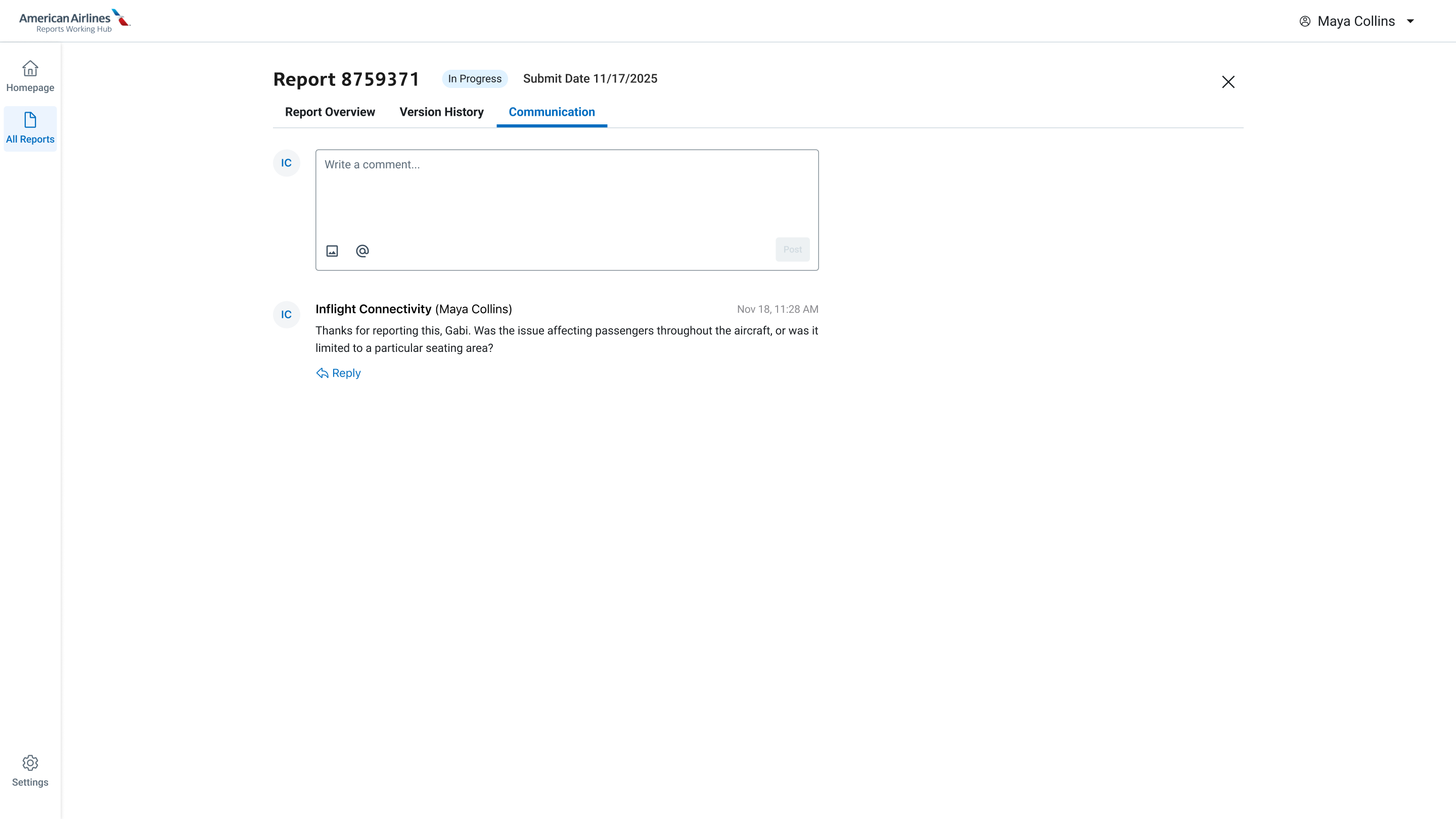
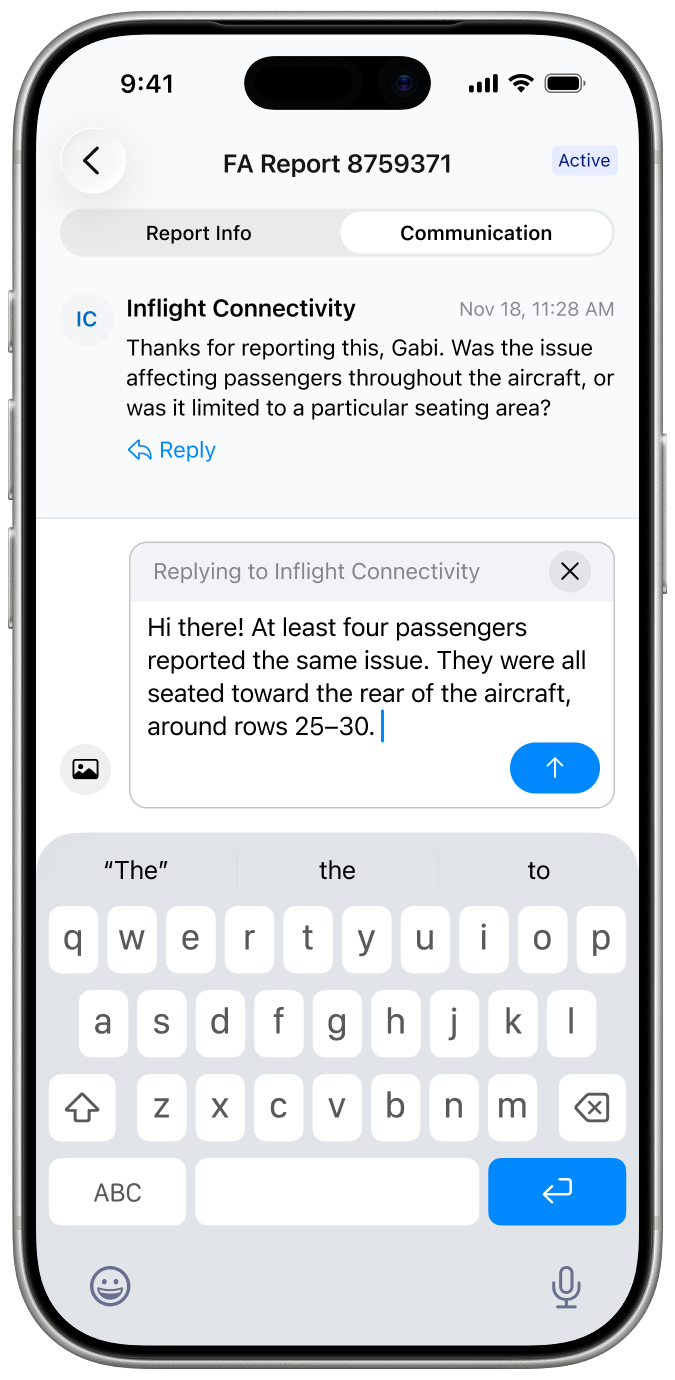
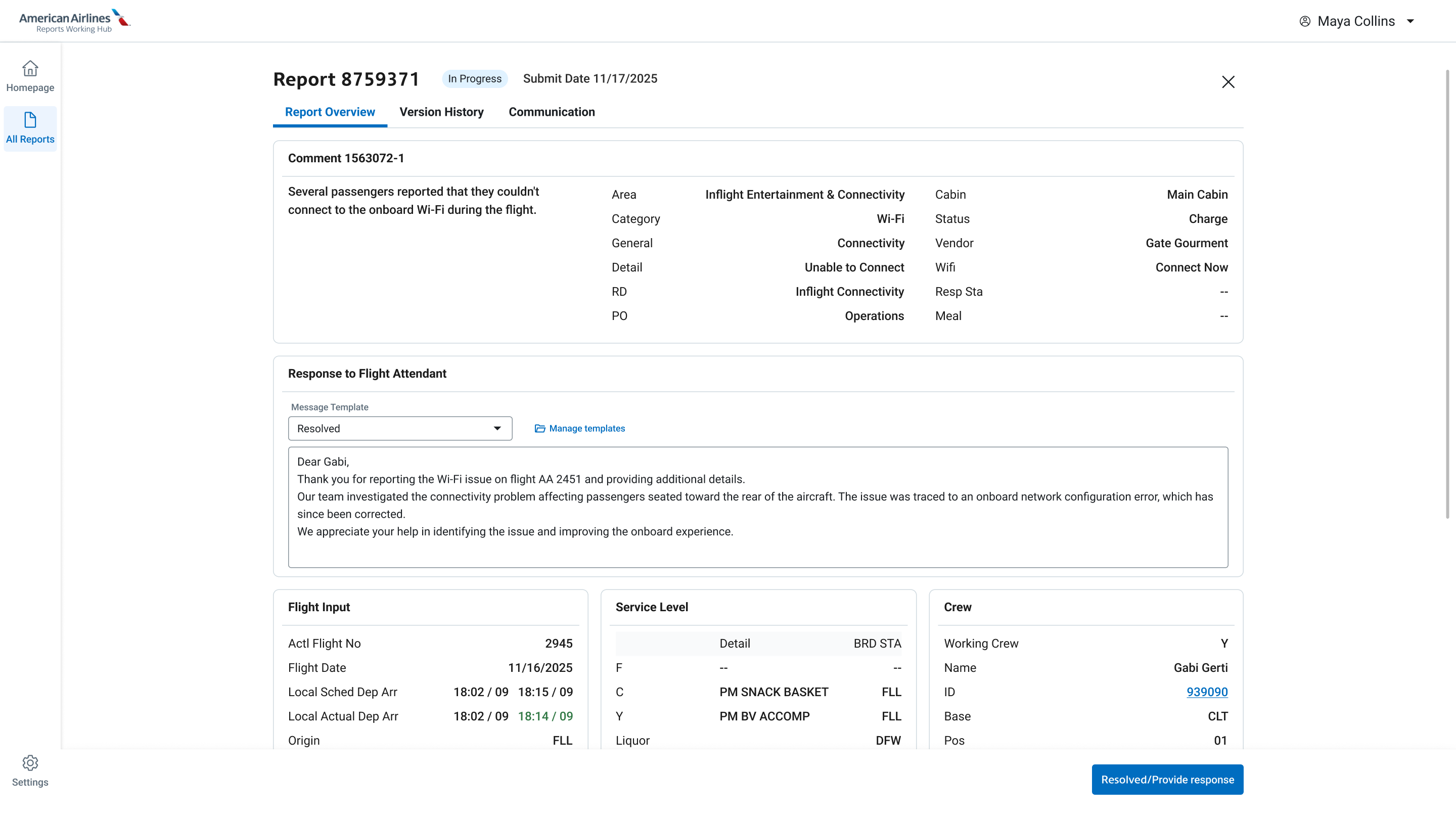
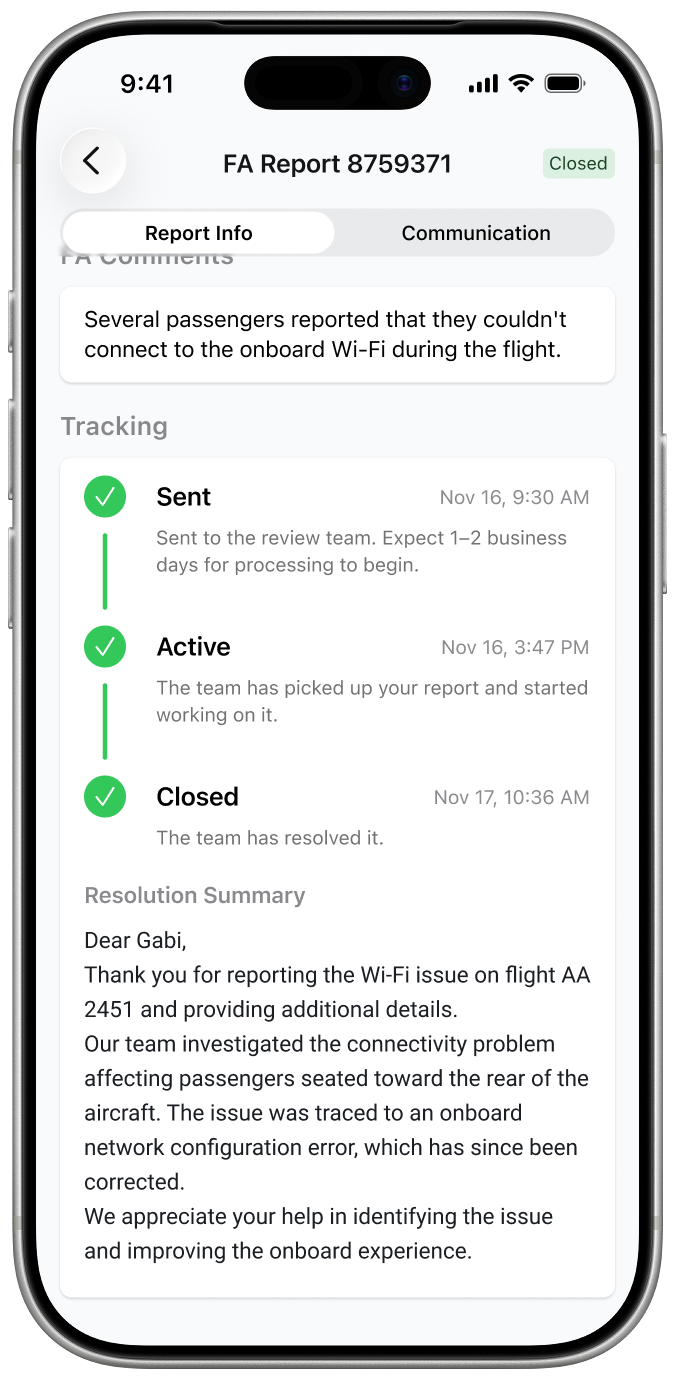
The redesigned workflow connects Operations and FAs beyond the initial submission. When more information is needed, Operations can request clarification directly from FAs. As reports progress, FAs can track their status and receive a written update when an issue is resolved.
01 — TWO-WAY COMMUNICATION
Operations and FAs can exchange messages directly within the report when clarification is needed.
02 — RESOLUTION FEEDBACK
Operations can provide a written resolution update, while FAs can track the report's status and see the outcome.
05.Where It Stands
From design to early validation.
The Reporting and Operations portals are in beta, while the FA experience remains in development. Early beta feedback has primarily surfaced usability refinements and technical integration issues, rather than major changes to the core workflow.
WHAT I'LL BE WATCHING
FA adoption · Manual intervention · Processing efficiency · Resolution feedback